Sep 15, 2026
How to Benchmark an AI Agent for Scientific Data Analysis
A practical framework for benchmarking complete scientific AI agents across outcomes, trajectorie...
·

Scientific work is vulnerable to silent agent failure. A file with the wrong sample or unit may still parse, and a candidate structure may explain most signals while violating one decisive constraint. Passed forward without challenge, such errors can produce an internally coherent but scientifically wrong report.
This guide separates failure modes by source, shows how they combine, and maps each one to detection and containment controls. It concerns software agents that coordinate data and analytical tools; physical instrument control requires additional safety engineering and validation.
Unlike a fixed script, an agent can choose tools, update a plan, retain memory, and decide when the task is complete. This flexibility introduces feedback: an interpretation changes the next action, whose output changes the next interpretation.
Consider a spectrum assigned the wrong solvent. The shift reference may be adjusted incorrectly; peak annotations may then be misclassified; a structure-search tool may receive distorted constraints; and the agent may treat the resulting poor matches as evidence that the compound is novel. No individual program has necessarily crashed. The error is semantic and becomes larger as the trajectory continues.
A scientific result must therefore include its path. The NIST scientific-workflow programme describes capturing tools, parameters, inputs, assumptions, and provenance needed to reproduce and validate an experiment. An agent should record enough context to reconstruct its result.
The 2026 SciAgentArena preprint reports uneven performance across roughly 200 interactive scientific tasks: agents did better on well-specified analysis workflows and struggled more with open-ended exploration. It is one benchmark, not a universal measure, but it supports a practical principle: ambiguity should increase supervision.
Separating overlapping categories makes incident review and control design more precise.
| Failure class | Typical example | Observable symptom | Primary containment |
|---|---|---|---|
| Input and provenance | Wrong sample, unit, reference, version, or incomplete metadata | Plausible output conflicts with acquisition or source records | Validate identity and schema before analysis; preserve originals and checksums |
| Representation | Conversion, normalisation, or parsing changes scientific meaning | Values shift after format conversion or dimensions no longer agree | Round-trip tests, invariants, versioned transforms, visual spot checks |
| Reasoning and hypothesis | Agent promotes an attractive explanation without testing alternatives | Narrative certainty rises while contradictory evidence remains | Mandatory counter-hypothesis and falsification steps |
| Tool selection | Correct tool used outside its validated domain | Tool succeeds technically but its output is not applicable | Tool contracts, applicability checks, scoped permissions |
| Tool execution | Wrong arguments, units, thresholds, file, or target | Unexpected output shape, extreme values, or no information gain | Typed schemas, dry runs, bounds checks, reversible operations |
| Memory and state | Stale observation or discarded warning influences later steps | Agent repeats resolved work or cites a superseded result | Immutable event log, explicit state transitions, provenance-linked memory |
| Planning and control | Looping, premature stop, or unbounded exploration | Repeated actions, rising cost, or conclusion before required evidence | Step, time, and cost budgets; progress tests; hard stop conditions |
| Security and authority | Untrusted content redirects tool use or exposes data | Action is permitted by credentials but unrelated to the scientific objective | Separate instructions from data; least privilege; approval gates |
| Human interface | Reviewer receives a confident answer without assumptions or alternatives | Automation bias and weak challenge | Evidence-first reports, calibrated uncertainty, named decision owner |
“Hallucination” is too broad to distinguish a model-generated claim from a parser error, stale memory, or misleading tool result. Controls depend on knowing which boundary failed.
Scientific garbage is often well formed. A CSV can satisfy its schema while a concentration uses the wrong unit; a readable spectrum can carry the wrong sample identifier.
Input validation therefore needs three layers:
Provenance is part of validation. The NIST Research Data Framework highlights persistent instrument identifiers, metadata, standards, and data history. Every derived object should retain links to its source, transformation, parameters, and software version.
Quarantine missing or contradictory inputs, never overwrite the acquisition, and distinguish “unknown” from a default. Silently replacing a missing field without recording the assumption fabricates evidence.
Tool access gives an agent leverage. It also creates failure modes that a standalone model does not have: selecting an inappropriate method, sending the wrong object, setting an invalid threshold, applying results outside the tool’s domain, or writing to an unintended record.
A tool contract should state:
Domain automation does not remove these requirements. For example, Bruker describes Advanced Chemical Profiling 2.0 as an NMR workflow spanning queued samples, instrument-control software, analysis, and reporting. That scope illustrates the number of boundaries an agentic layer may encounter; it does not establish that a separate agent can safely operate them without explicit interfaces and validation.
External content adds a security dimension. The AgentDojo paper demonstrates that instructions embedded in tool-returned data can redirect an LLM agent. A laboratory note, database field, or imported report must not become an authorised command. Separate data from instructions and grant only the actions required for the current task.
A scientific agent may generate a plausible hypothesis early and then interpret later observations in its favour. It selects confirmatory tools, discounts conflicts as noise, or stops as soon as one candidate crosses an internal threshold. This is automation-assisted confirmation bias.
The control is not simply “reason longer.” Require three answers:
Candidate generation and candidate evaluation should be separable where practical. Independent algorithms, held-out measurements, orthogonal techniques, or a blinded expert can challenge the favoured result. Repeating the same prompt with the same evidence may create variation, but it is not independent verification.
The NIST Generative AI Profile treats confabulation as a risk and recommends empirical testing, appropriate human review, provenance, and post-deployment monitoring. Scientific monitoring should include unsupported assertions, constraint violations, sensitivity to reasonable input changes, and missed abstentions.
An apparently successful completion can be more dangerous than a visible crash. A 2026 case study of astrophysical workflows, “Plausible but Wrong”, reports syntactically valid computations that produced plausible but inaccurate results and physically inconsistent outputs without self-diagnosis. The domain differs from analytical chemistry and the study covers only eighteen tasks, so its numerical results should not be generalised. Its operational lesson transfers: scientific validity needs external checks.
Agents can fail by doing too much or too little. In a loop, the system repeats searches, reprocesses the same data, alternates between equivalent hypotheses, or calls tools without increasing information. At the other extreme, it may mistake a plausible candidate or successful tool response for task completion.
Different tool calls can still be semantically redundant. Track unresolved constraints, candidate-set change, new evidence, and distance to acceptance criteria. If successive actions make no measurable progress, stop and escalate.
Useful control limits include:
Budget exhaustion is a workflow status, not evidence that the leading hypothesis is correct. Preserve what is known, unresolved, and needed next.
Imagine an agent asked to assess whether a newly acquired spectrum supports an expected material identity. The file parses, preprocessing succeeds, and a comparison tool returns a high similarity to the reference. The agent writes “identity supported” into a draft report.
Later, a scientist notices that a weak diagnostic region is absent. The incident trace reveals that the acquisition filename was copied from the previous sample. The agent joined records by filename rather than immutable sample ID, then retrieved the previous sample’s reference spectrum. Every downstream tool operated as designed.
| Incident stage | Failure | Control that should detect it | Containment if detected |
|---|---|---|---|
| Intake | Filename conflicts with sample and acquisition identifiers | Cross-check immutable IDs, queue record, timestamp, and checksum | Quarantine the case before processing |
| Retrieval | Reference selected from the wrong record | Require reference lineage and an exact task-to-record join | Block comparison and request record correction |
| Comparison | High similarity treated as sufficient | Check mandatory diagnostic regions and negative evidence | Mark result inconsistent; retain alternatives |
| Reasoning | Agent explains missing signal as noise | Require explicit contradiction accounting | Escalate instead of downgrading evidence silently |
| Reporting | Draft hides assumptions and record lineage | Evidence-first report template with source IDs and warnings | Prevent approval until trace is complete |
| Review | Reviewer sees only a summary conclusion | Human gate displays conflicts and provenance before recommendation | Reject disposition and open an incident |
The root cause is an unsafe identity join, weak negative-evidence checks, and concealed provenance. The fixes are stable identifiers, testable joins, visible conflicts, and a hard block when identity checks fail.
After containment, replay the case and neighbouring cases, add the incident to a regression set, and check earlier results produced by the affected versions.
No single guardrail covers the full trajectory. Defence in depth should place controls before, during, and after action:
| Layer | Prevent | Detect | Contain and recover |
|---|---|---|---|
| Data | Schemas, immutable IDs, controlled vocabularies | Range, relationship, checksum, and duplicate checks | Quarantine; restore original; correct metadata with audit trail |
| Tools | Typed contracts, allowlists, least privilege | Validate arguments, output shape, applicability, and side effects | Cancel; roll back; revoke capability; require approval |
| Reasoning | Explicit objective, constraints, and stop rules | Counter-hypotheses, contradiction checks, independent validators | Abstain; branch analysis; send evidence to expert |
| Orchestration | State machine and action budgets | Loop and no-progress monitors, timeout, retry telemetry | Terminate safely; checkpoint; resume only after review |
| Human review | Named decision owner and review criteria | Surface provenance, uncertainty, alternatives, and warnings | Override, annotate, investigate, and add regression case |
| Operations | Versioned components and staged release | Drift metrics, incident signals, audit sampling | Roll back version; suspend workflow; revalidate affected scope |
Match controls to the decision. A research assistant proposing hypotheses can tolerate different uncertainty and permissions from a system influencing batch release. Consequential decisions need stronger evidence, separation of duties, and independent review.
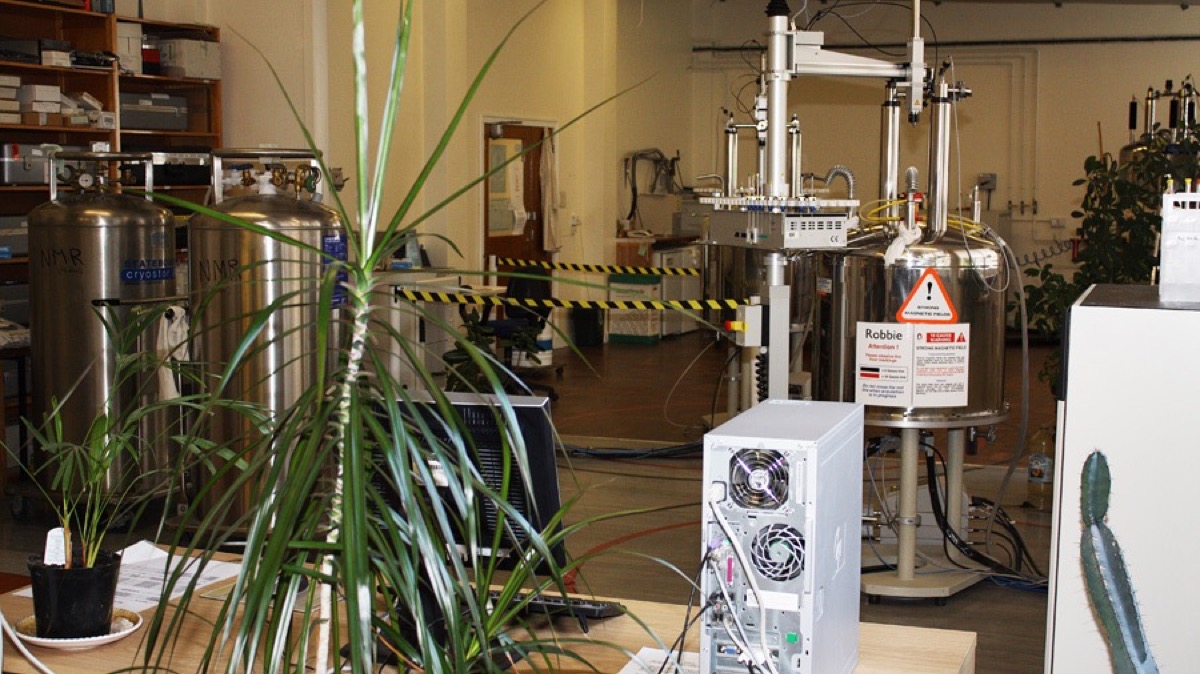
NMR structure interpretation makes cascading failures easy to see. Reference errors alter shifts; peak-picking choices alter constraints; overlap makes correlations ambiguous; and one unsupported connection can change a candidate structure. The useful role for an agent is therefore not an opaque jump from spectrum to answer. It is to coordinate bounded tools while preserving the evidence chain, rejected hypotheses, unresolved conflicts, and chemist review.
Rombo AI applies this principle to specialist NMR workflows: reusable spectral representations and analytical tools can support individual steps, while orchestration determines what to do next and when to abstain. Spectra AI and Spectra API remain a distinct product line for compound identification and structure elucidation; they are not interchangeable with Rombo AI’s broader platform for material and mixture analysis.
This article does not claim autonomous instrument operation, universal file compatibility, specific integrations, or validated performance for every laboratory context. Those boundaries must be documented and tested for the intended use.
Designing a governed agentic workflow for scientific data? Contact Rombo AI to discuss evidence requirements, failure tests, and review boundaries for your application.
A plausible but invalid result is often more dangerous than an explicit error because it can pass into reports or decisions without triggering investigation. Independent scientific checks, provenance, and contradiction reporting help expose silent failure.
Not by itself. More reasoning steps can help plan a task, but they also create more opportunities for error propagation and loops. Reliability comes from grounded observations, independent validation, bounded tools, progress checks, and defined stopping rules.
Track whether successive actions add evidence, resolve constraints, change the candidate set, or reduce uncertainty. Repeated or semantically equivalent actions without measurable progress should trigger a stop, not unlimited retries.
Authority should match consequence. Drafting a traceable result can be acceptable, while changing a system of record, controlling an instrument, or approving a release may require separate permissions and human approval. Writes should be scoped, logged, and reversible where possible.
Record the objective, inputs and provenance, full trajectory, tool and model versions, parameters, permissions, observations, warnings, human actions, affected outputs, root cause, containment, and regression test. Avoid reducing the incident to a generic label such as hallucination.
Posted by: Martina [Marketing Specialist, Rombo AI]
BOOK A DEMO
Share your analytical challenge with our team. We will assess technical fit, data or sample requirements, and the fastest path to a focused pilot.
Book a demo