Rombo AI Platform

AI for industrial NMR analysis

Turn benchtop NMR data into material property predictions. Start with a free review of your samples, reference methods and validation goals.

From research to an industrial evaluation

Read our published refinery case study to see the analytical challenge and evaluation approach. Results depend on sample coverage, reference data and validation conditions.

Planning a model evaluation? See what to prepare for an NMR AI feasibility review.

Choose your analytical challenge

Start with your sample, the decision you need to make and the evidence required to validate it.

Crude oil and blends

Problem. Purchasing and blending decisions cannot always wait for a full crude assay.

Data. Benchtop NMR measurements, representative crude samples and reference assay results.

Outcome to evaluate. Assess property prediction against your laboratory methods before a focused pilot.

Explore crude oil and blends → Discuss feasibility →

Transformer oil

Problem. Asset teams need comparable evidence of oil condition across samples and time.

Data. Oil spectra, sample history and reference measurements of condition.

Outcome to evaluate. Evaluate whether spectral changes can support your maintenance decisions.

Explore transformer oil → Discuss feasibility →

NMR compound identification

Problem. Manual candidate review creates a bottleneck in research and impurity investigations.

Data. NMR data and available sample context, with expert review of candidate structures.

Outcome to evaluate. Use Spectra to support candidate review; confirm assignments with your chemists.

Explore nmr compound identification → Discuss feasibility →

Rombo AI Platform for Industrial NMR Analysis

In oil & gas, petrochemicals, chemicals and energy, material quality determines how a product will perform. Yet accurate characterization is still slow and hard to scale:

  • A full characterization often requires several reference methods, instruments and specialists
  • Results can take days, while operational decisions can't wait
  • Manual, repetitive workflows introduce variability between analysts and sites
  • Reports remain isolated snapshots instead of a comparable history

In industrial contexts, while process indicators may look stable to QC operators, the chemical change and material shift may already be happening. The problem is not the measurement — it's the lack of early signals, with critical deviations leading to significant production loss.

Industrial Value

What you gain from deploying Rombo AI Platform in your operations.

Faster Characterization
Early detection of drifts & non-conformities.
Clear, Actionable Data Insights
Confident industrial decisions based on real material intelligence.
Consistent Material Fingerprint
Over time, across batches and conditions.
Traceable & Comparable Results
Standardizable across sites and campaigns.
Validated Against Reference Methods
Benchmarked against your ASTM or IEC reference methods before go-live.
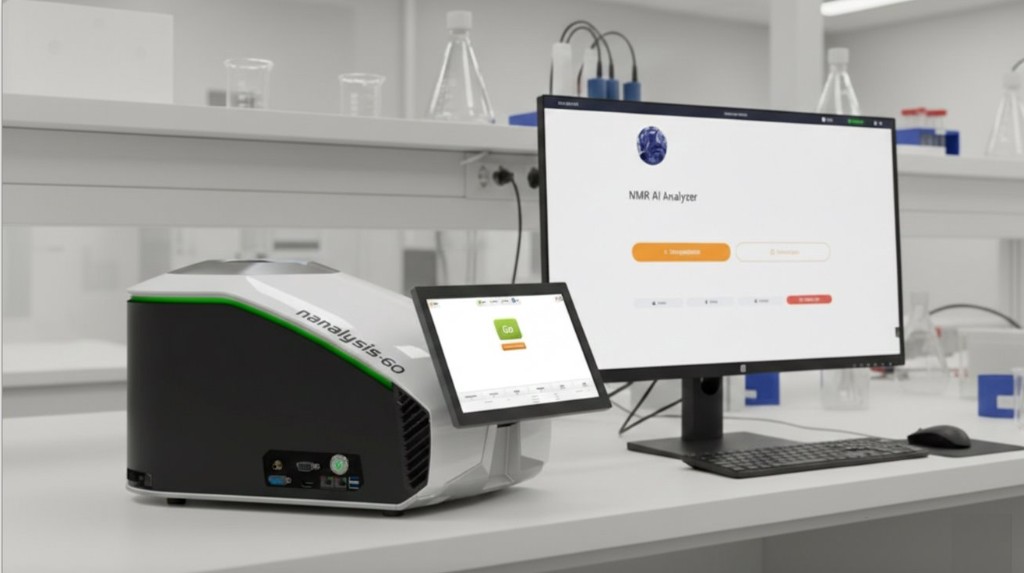
NMR AI Analyzer with Nanalysis-60 benchtop spectrometer

Rombo AI Platform

Rombo AI Platform brings NMR acquisition and domain-specific AI into industrial workflows, with traceability, reproducibility, local validation, and expert review as first-class requirements.

Workflow flow: Sample Material (raw spectra) → Processing (our patented ML models) → Report (characterization, identification, material insight)

Build a consistent, explainable material state baseline. Detect drifts, chemical regime changes, and early signs of irreversibility.

One platform, two modules

NMR AI Analyzer and AutoML Framework are modules of Rombo AI Platform. Each production workflow is validated on relevant instruments, samples, and operating conditions.

Module 1 — NMR AI Analyzer

Module 1

NMR AI Analyzer

Discover the unique AI + Spectroscopy power. NMR AI Analyzer is designed for industrial labs where traceability and comparability matter. The software controls the NMR data acquisition, AI model integration, report generation, and integration with enterprise systems.

Key Features:

Raw Spectra Ingestion & Deep Learning Analysis
Ingest raw benchtop NMR spectra and analyze spectral patterns consistently across campaigns.
Multi-Property Prediction
Configure the physico-chemical properties you need and get them from a single scan.
Regime Change & Drift Detection
Timely detect chemical regime changes and gradual drifts in material behavior over time.
15-Minute Full Report Generation
Go from sample to multi-property report in about 15 minutes, removing lab bottlenecks and accelerating industrial decisions.
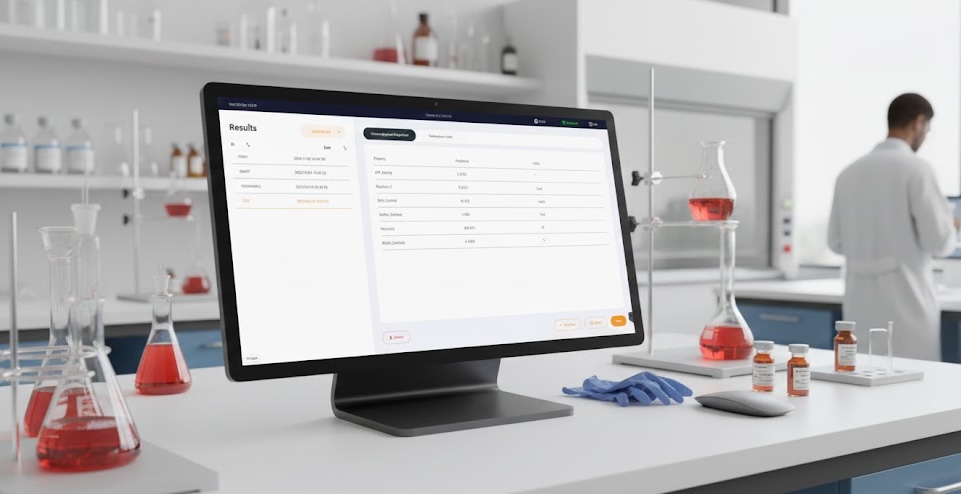
NMR AI Analyzer results

Module 2 — AutoML Framework

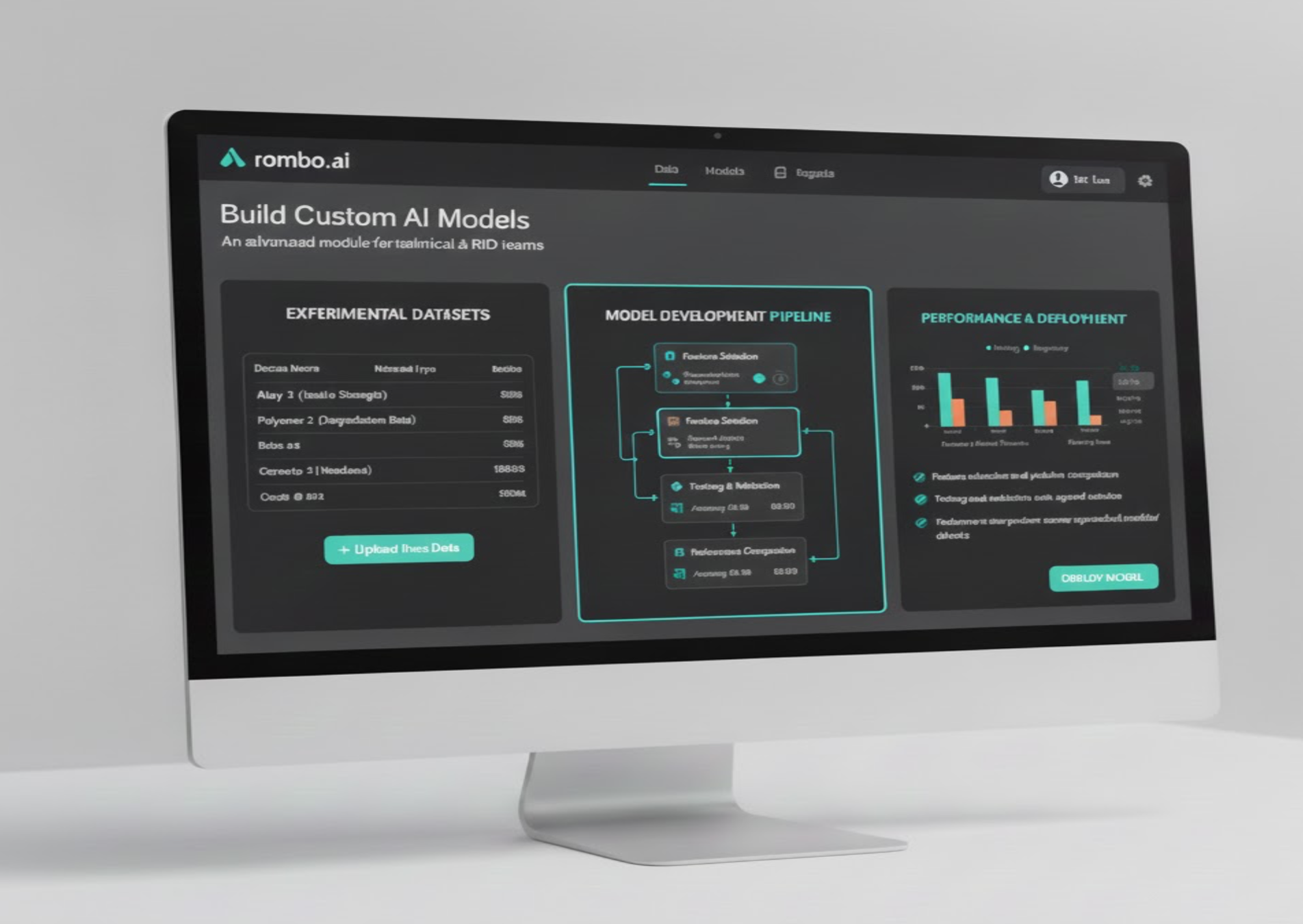
AutoML framework

Module 2

AutoML Framework

Our AI expertise, at your service. As an optional module, we enable R&D teams to build their own internal ML modules and custom pipelines, while retaining 100% Intellectual Property and utilizing their own data. It supports model selection, validation, and comparison — grounded in experimental datasets.

  • Feature selection and pipeline comparison
  • Training and validation with agreed metrics
  • Performance comparison across approaches & models
  • Support for adapting to new datasets (data quality + validation criteria)
Built on an NMR foundation model
Every AutoML pipeline starts from ROSE, our openly published foundation model pre-trained on 3.2 million ¹H NMR spectra, and can build on our proprietary models trained on internal industrial datasets. Your custom models start from a rich spectral representation instead of from scratch, so they need less calibration data.
How it's delivered
Best for technical and R&D teams. We start with a short conversation to assess fit, data or sample requirements, and validation criteria before defining a structured pilot.
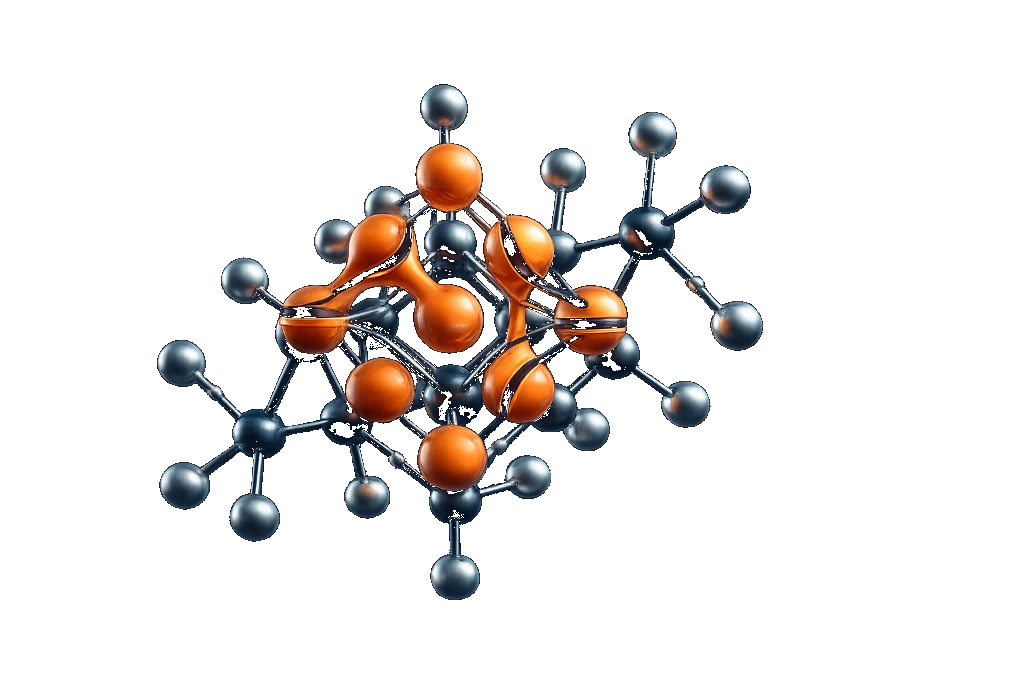
Molecular visualization of Rombo AI’s NMR foundation model

Technology

Built on an NMR foundation model

Rombo AI Platform is powered by a spectral foundation model trained to learn reusable representations from NMR data. This shared foundation supports faster adaptation across analytical tasks while each production use remains subject to validation on the relevant instruments, samples, and operating conditions.

How we work

Talk through your analytical challenge.

We first assess the analytical problem, available data or samples, and target decision. If there is a strong fit, we define a focused pilot with clear objectives, success metrics, and a roadmap to scale.

1. Share the challenge

What sample type, workflow, and decision do you need to improve?

2. Review the fit

We review technical fit, data quality, sample requirements, and validation constraints.

3. Define the pilot

If the fit is strong, we propose objectives, metrics, timeline, and expected outputs.

4. Plan scale-up

After validation, we support integration and production-readiness.

What you get first: a clear view of fit, sample needs, validation criteria, and a recommendation for the next step.