Aug 18, 2026
AI Crude Oil Analysis: Lab Testing vs NIR vs High-Field NMR vs Rombo AI
Refinery teams now choose among laboratory testing, NIR, high-field NMR, and Rombo AI for crude o...
·
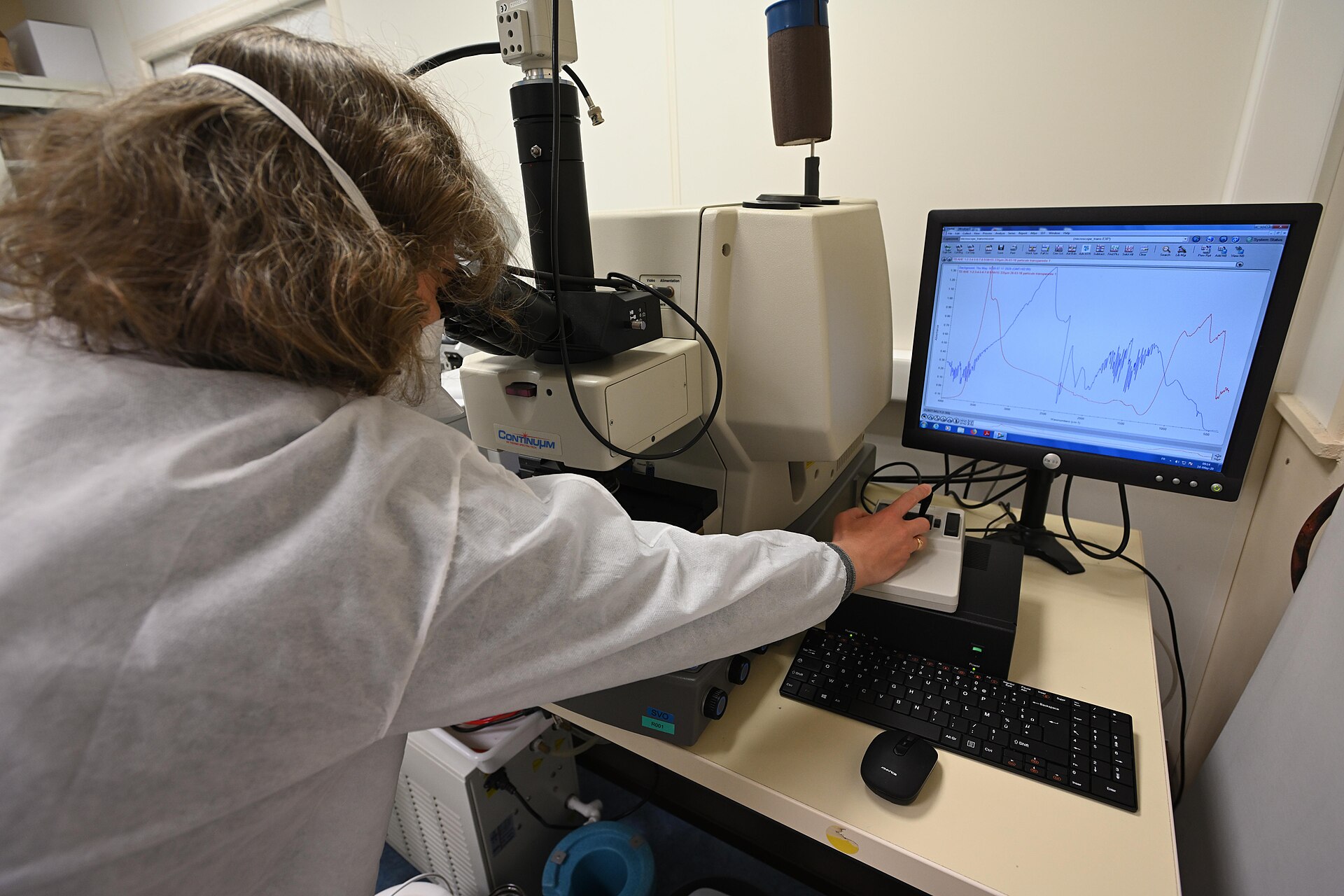
Labs now choose among three types of analytical chemistry software. Instrument-native tools connect acquisition and processing within one vendor’s hardware. Vendor-neutral suites process data across instrument brands and analytical techniques. AI-native platforms automate spectral interpretation across varied instruments and sample types.
Four criteria separate these options. Vendor-agnostic support measures how broadly each platform accepts and interprets data across instrument makers. Routine use fit reflects how well the software handles recurring acquisition, processing, reporting, and review.
Deep research fit covers advanced experiments, custom methods, and detailed manual control. Automation measures how much spectroscopy software can reduce repetitive analysis and apply consistent interpretation across larger data volumes. A single-vendor lab may favor acquisition integration, while a mixed fleet may place more weight on format support and automated interpretation.
Fit ratings reflect each product’s documented scope, instrument support, and automation model.
| Product | Vendor-agnostic support | Routine use fit | Deep research fit | Automation | Pricing model |
|---|---|---|---|---|---|
| Rombo AI | High. Models generalize across instruments and sample types. | High for rapid, repeated analysis. | High for interpretation across varied samples. | High. A foundation model pretrained on millions of spectra drives analysis. | Custom quote with a free feasibility analysis. |
| Mnova | High. The suite accepts multiple vendor formats. | High for processing and reporting. | High. Modules cover NMR, chromatography, mass spectrometry, and optical spectroscopy. | Moderate. Processing tools assist users, but sources do not document autonomous interpretation. | Quote-based institutional or network licensing. |
| TopSpin | Moderate. Offline processing reads several vendor formats, but acquisition remains Bruker-centric. | High for Bruker instrument workflows. | High for NMR acquisition and processing. | High within Bruker workflows through SpinPilot. | Commercial quotes. Academic users receive free processing-only licenses. |
| ACD/Labs NMR Suite | High. Spectrus supports major vendor formats and open formats. | High for shared analytical data workflows. | High for multi-technique compound characterization. | High for configurable enterprise workflows and knowledge management. | Custom commercial quote. |
| JASON | Limited documentation beyond the JEOL ecosystem. | High for JEOL labs and qNMR work. | High for DOSY, qNMR, and structural analysis. | Moderate to high. BeautifulJASON exposes functions through Python. | Quote-based Academia and Industry plans. |
Commercial pricing remains non-public and quote-based across all five vendors.
Rombo AI represents the AI-native tier of analytical chemistry software. Its foundation model was pretrained on millions of spectra, so it can interpret unfamiliar spectra by applying patterns learned across a broad training set. The model generalizes across instrument brands, sample types, and operating conditions rather than depending on one narrowly defined workflow.
Traditional chemometric models usually require calibration data that match a specific instrument and sample class. A new spectrometer, facility, or material can require another calibration cycle. Rombo AI reduces that dependency because its pretrained model provides a shared starting point for each deployment.
That approach suits labs with mixed instrument fleets and multiple sites. You can apply a common interpretation layer across Bruker, JEOL, Agilent/Varian, and Oxford Instruments data while retaining instrument-native software for acquisition or specialized processing. New locations can adopt the same model with less per-site retraining than a conventional chemometric deployment would typically require.
Rombo AI reports that its platform can complete analyses in 15 minutes that previously took weeks. The time reduction reflects the operating model. Pretrained interpretation replaces much of the manual model building, calibration, and expert review required for each new analytical problem.
Mnova gives research labs one multi-vendor environment for several analytical techniques. Its modules cover NMR, LC-MS, GC-MS, and electronic and vibrational spectroscopy through ElViS. Researchers can process spectra, combine results across techniques, annotate data, and prepare reports for publication in the same desktop platform. University of York describes Mnova as a vendor-neutral suite rather than software tied to one instrument maker.
Academic institutions often provide Mnova through site or network licenses. For example, the University of Rochester funds access for faculty, staff, and students, while users connect the installed client to a university license server. The university also specifies a particular software version for compatibility, which shows how local IT policies can shape deployment. Rochester positions Mnova as shared research infrastructure across chemistry disciplines.
Mnova fits labs that value broad processing and reporting tools across mixed analytical data. Its main strength lies in researcher-controlled analysis rather than autonomous interpretation.
TopSpin best serves labs that acquire most of their NMR data on Bruker instruments. Bruker connects spectrometer control, experiment setup, acquisition, and processing within one environment, which reduces handoffs between instrument software and separate analysis tools.
Academic users can obtain a free processing-only license for off-instrument work. That tier can process Bruker data as well as files produced by Agilent, Varian, and JEOL systems, but cross-format processing does not provide the same acquisition integration on third-party instruments.
Bruker presents SpinPilot in TopSpin 5 as a way to standardize routine acquisition steps and extend automation across a lab. The available support for SpinPilot’s automation capabilities comes from Bruker’s own promotional material, so buyers should confirm the supported experiments and deployment requirements directly. Commercial pricing remains non-public.
Spectrus Processor fits labs that need one informatics layer for analytical data produced by mixed instrument fleets. The Spectrus Platform supports major instrument vendor formats, along with open formats such as JCAMP, ASCII, and Allotrope ADF. A lab can therefore process data without maintaining a separate workflow for each instrument brand.
ACD/Labs also combines NMR with other analytical techniques in a common interface. That multi-technique approach helps industrial labs assemble related measurements when identifying compounds or managing analytical records.
Spectrus extends beyond desktop processing through automated solutions and custom enterprise projects. These capabilities suit organizations that need analytical knowledge management across departments or sites. By comparison, instrument-native software usually provides a tighter connection to acquisition hardware, while Spectrus concentrates on cross-vendor ingestion and enterprise automation.
JASON fits JEOL-native labs that want processing and structural analysis close to their instrument environment. JEOL positions JASON as the structural-analysis layer downstream of NMR acquisition, including workflows that combine NMR and mass spectrometry.
JASON offers particular depth for DOSY and quantitative NMR. Its DOSY tools fit diffusion data and calculate corrected diffusion time from pulse-sequence parameters. The SMILEQ plugin supports multiple references, internal and external standards, and ISO 24583-compliant uncertainty calculations.
BeautifulJASON provides the main automation extension. The Python package lets you call JASON functions inside custom lab workflows and analytical data projects. JEOL also separates Academia and Industry plans, although public pricing remains unavailable. JASON makes the most sense when JEOL integration, DOSY, and qNMR outweigh the need for documented cross-vendor support.
If your academic lab uses one instrument brand, choose the vendor-native row. TopSpin fits Bruker fleets, while JASON fits JEOL fleets and adds Python automation for custom routines.
If you manage a multi-instrument industrial fleet, prioritize software that handles spectra across vendors and sites. Rombo AI fits labs that need automated interpretation and faster turnaround, while ACD/Labs suits enterprises focused on multi-format ingestion and informatics.
If your lab conducts deep research across several analytical techniques, Mnova offers broad processing support beyond NMR. Your fleet complexity and turnaround requirements should decide the pick. Brand familiarity alone does not indicate how well analytical chemistry software will support your instruments or workload.
Posted by
Silvia Bongiovanni — Marketing & Communications
BOOK A DEMO
Share your analytical challenge with our team. We will assess technical fit, data or sample requirements, and the fastest path to a focused pilot.
Book a demo