Aug 13, 2026
Why Maturity Tiers Matter for Choosing Spectral Software
Choosing software for Nuclear Magnetic Resonance (NMR) and spectroscopy analysis requires evaluat...
·
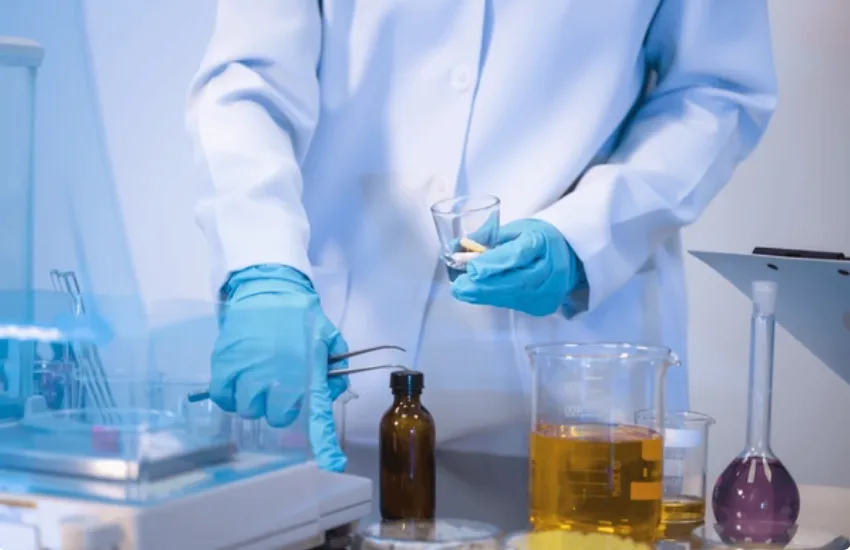
Manual interpretation slows QC because NMR spectra often require judgment that fixed rules cannot reproduce. Complex hydrocarbon mixtures produce overlapping resonances, while heavy oils and emulsions can distort the data further. Analysts may need [chemometric deconvolution or other specialized techniques](https://www.creative-biostructure.com/resource-nmr-in-petrochemical-industry.htm) before they can identify compounds and approve a sample. or other specialized techniques before they can identify compounds and approve a sample (NMR use-case research).
Mixed instrument fleets add another layer of work. A method validated on one vendor’s instrument may respond differently to changes in field strength, sensitivity, acquisition settings, or file format. You must standardize results across instruments before you can apply one QC threshold with confidence. Instrument additions and method transfers can therefore trigger new validation work.
Conventional automation reduces repetitive handling but still depends on trained specialists. [Bruker describes ACP 2.0](https://www.azom.com/article.aspx?ArticleID=25291) as a tool that lets an NMR expert build an automated workflow, and Bruker keeps that expert responsible for method development and monitoring. as a tool that lets an NMR expert build an automated workflow, and Bruker keeps that expert responsible for method development and monitoring (Bruker automation overview). The software can automate sample movement, acquisition, processing, and reporting after validation. Novel spectra, method changes, and uncertain results can still return to expert review.
Specialist review creates a queue when sample volume exceeds analyst capacity. Each ambiguous spectrum consumes time that the analyst cannot spend validating methods or investigating genuine exceptions. QC turnaround then depends on expert availability rather than instrument throughput.
Rombo AI replaces spectrum-by-spectrum interpretation with a proprietary model pre-trained on millions of spectra. A foundation model learns reusable relationships between spectral patterns and material properties before a lab supplies its own data. The model can apply those learned representations across different sample types and NMR instruments instead of starting with an empty calibration for each workflow.
Traditional chemometric models usually learn from reference samples collected under defined conditions on a specific instrument. Changes in the spectrometer, acquisition settings, or sample matrix can shift the data enough to require another calibration and validation cycle. Rombo AI starts with broad spectral knowledge, so a smaller local dataset can adapt the model to a lab’s QC target.
Rombo AI Platform provides the automation layer that applies this model within the lab’s analytical workflow. Its NMR AI Analyzer processes an incoming spectrum and generates the requested material assessment without requiring a specialist to interpret every peak manually. The same underlying model can work with spectra produced by Bruker, JEOL, Agilent/Varian, and Oxford Instruments systems without rebuilding a separate model for each instrument.
Pre-training removes much of the repetitive model development and expert review that lengthen conventional NMR projects. Rombo AI reports analysis in as little as 15 minutes for workflows where manual interpretation and reporting can take weeks. Actual deployment still requires lab-specific validation, but the foundation model reduces the amount of historical data and calibration work needed to reach that stage.
Rombo AI provides one interpretation layer for supported Bruker, JEOL, Agilent/Varian, and Oxford Instruments systems. Its pretrained model applies a shared analytical approach instead of requiring a separate chemometric model for every instrument. You can route comparable QC work through one spectral analysis workflow while retaining the instruments already installed across sites.
Without recalibration means you do not need to rebuild an interpretation model solely because you add, replace, or switch to another supported instrument. For example, a lab can move an equivalent QC test between a Bruker system and a JEOL system without collecting a new calibration dataset for the AI layer. The same principle applies when a second site uses Agilent/Varian equipment or an Oxford Instruments analyzer.
Mixed fleets still require controlled acquisition methods, sample preparation, and acceptance criteria. Rombo AI does not make unlike experiments directly comparable. Instead, it normalizes and interprets appropriate spectral inputs through a common layer, which helps you compare equivalent tests without maintaining separate analytical logic for each vendor.
Cross-vendor consistency carries particular value in regulated or standardized QC programs. Industry NMR methods often require cross-vendor standardization, especially when results support ASTM-based parameters. Rombo AI reduces the instrument-specific calibration work around that requirement while your lab keeps its existing validation and governance controls.
The four platforms automate different parts of NMR quality control. Rombo AI focuses on spectral interpretation across mixed instrument fleets, while the alternatives center on configured workflows, specialist analysis tools, or analytical data management.
| Buyer criterion | Rombo AI | Mestrelab | Bruker | ACD Labs |
|---|---|---|---|---|
| Interpretation approach | A foundation model pre-trained on millions of spectra interprets QC results through the NMR AI Analyzer. | Processing and analysis tools support configurable workflows that may require specialist training. | ACP 2.0 combines configured workflows with deep learning for interpretation, noise reduction, and baseline correction. | Spectrus centers on vendor-neutral data processing, organization, and access rather than autonomous NMR QC interpretation. |
| Mixed-instrument operation | Supports Bruker, JEOL, Agilent/Varian, and Oxford Instruments data without per-instrument recalibration. | Instrument and format support depends on the selected product and workflow configuration. | ACP 2.0 runs natively within TopSpin, which favors Bruker infrastructure rather than a vendor-independent interpretation layer. | The Spectrus Platform handles vendor-neutral, multi-technique data, but its stated focus is analytical knowledge management. |
| Turnaround time | Rombo targets automated interpretation in minutes rather than manual review cycles lasting days or weeks. | Turnaround depends on workflow design and analyst involvement. No benchmark appears in the supplied research. | Bruker describes automated acquisition, processing, interpretation, and reporting. No specific turnaround benchmark appears in the supplied research. | Centralized data access can reduce handling time, but ACD Labs does not publish an autonomous NMR interpretation benchmark in the supplied research. |
| Human involvement | Routine samples can pass through automated interpretation, while analysts review exceptions and approval decisions. | Analysts configure workflows and use the suite’s processing and interpretation tools. | Bruker keeps the NMR expert responsible for method development and workflow monitoring. | Scientists retain responsibility for interpretation while Spectrus organizes data and supports processing. |
Rombo AI fits labs that want one interpretation layer across a mixed fleet. Bruker offers tighter native automation for Bruker environments, Mestrelab provides broad analytical tooling, and ACD Labs provides vendor-neutral data infrastructure.
Wax-content testing fits a high-volume automated workflow because TD-NMR requires little sample preparation. The measurement distinguishes rigid wax-crystal protons from mobile oil components through their different relaxation behavior, and acquisition typically takes under two minutes per sample. Rombo AI can interpret the measurement against validated QC limits and send only unusual results for specialist review.
Fuel-property prediction can replace several separate measurements with one NMR scan. Validated PLS models use spectral patterns to estimate cetane number, octane number, and flash point. The NMR AI Analyzer can process each spectrum, apply the approved prediction workflow, and return a result without waiting for an analyst to inspect every spectrum. Your lab still controls model validation and acceptance limits.
Refining labs can apply the same automated pass to incoming materials and finished products. Common checks include base-oil consistency, blend monitoring, hydrogen content, and combustion properties. Oxford Instruments describes NMR methods for these workloads as faster and cleaner than traditional wet chemistry. Automated interpretation removes the next delay by comparing each result with the expected spectral profile as soon as the instrument finishes acquisition.
Heavy oils, emulsions, and overlapping hydrocarbon signals may still require controlled preparation or specialist review. Rombo AI can flag low-confidence or out-of-spec results for investigation while releasing routine results through the validated QC path.
Biotech labs can use Rombo AI to automate first-pass NMR interpretation for formulation and raw-material identity testing. The NMR AI Analyzer compares spectra across sample types and flags results that need specialist review. Its foundation model can work with smaller lab-specific datasets than traditional chemometric models typically require, subject to validation against each lab’s methods and acceptance criteria.
Batch-release workflows can use automated spectral interpretation to shorten the interval between measurement and review. Rombo AI can normalize spectra collected across mixed Bruker, JEOL, Agilent/Varian, and Oxford Instruments fleets, which helps labs apply consistent analysis when sites or departments use different instruments. Quality staff still retain final release authority and can review the model output within the lab’s approved process.
Structural verification offers another potential use case. Scientists can use automated interpretation to check whether an intermediate, reference material, or finished sample matches the expected spectral pattern before escalating unusual results. Because Rombo AI pre-trains its model on millions of spectra, the platform can recognize broader spectral patterns without building a separate model for every instrument. A feasibility analysis can determine whether a specific biotech assay, sample set, and validation requirement suit this approach.
Rombo reduces labor cost by moving routine spectral interpretation away from specialists. The NMR AI Analyzer can reduce analysis that previously took weeks to about 15 minutes, according to Rombo. Faster interpretation lets the lab release conforming batches, investigate failures, or adjust production without waiting for an expert review queue.
Bruker also automates acquisition, processing, interpretation, and reporting, but its workflow keeps the NMR expert responsible for method development and monitoring. That approach reduces repetitive work after an expert configures and validates each workflow. Rombo applies a pre-trained model across mixed instrument fleets, which can reduce the specialist time spent building instrument-specific models and reviewing routine samples.
The savings depend on sample volume and exception rate. For example, 100 samples requiring 30 minutes of manual interpretation consume 50 specialist-hours. If automation sends 10 percent of those samples for the same review, routine interpretation falls to five hours. The lab must still budget time for validation, unusual spectra, and regulated approvals.
Turnaround improves because software can analyze each spectrum as soon as the instrument produces it. Specialists can focus on failed checks and ambiguous results instead of reading every spectrum in sequence. A feasibility analysis can estimate the likely savings using your current sample volume, review time, instrument mix, and QC approval requirements.
Start a free feasibility analysis to determine whether your NMR QC workload suits AI automation. Prepare a list of your NMR instruments and vendors, the sample types you test, your typical monthly volume, and your current QC turnaround time.
Rombo AI will review your existing workflow, available spectral data, and acceptance criteria. You can then identify a suitable first use case, estimate the data needed for evaluation, and define how a pilot would measure turnaround, accuracy, and specialist labor.
Does Rombo AI require recalibration when we add a new instrument brand?
Instrument calibration adapts an analysis model to the output characteristics of a specific instrument. Rombo AI uses a foundation model built to interpret spectra across Bruker, JEOL, Agilent/Varian, and Oxford Instruments systems without per-instrument recalibration. You can add or replace instruments without rebuilding a separate model for each vendor.
How does Rombo AI support regulated workflows and audit trails?
An audit trail records data, model outputs, user actions, and approvals for later review. Rombo AI can be evaluated against your data-integrity, validation, access-control, and record-retention requirements during deployment planning. Your quality unit can identify required controls before using automated results in a regulated decision.
How much historical data do we need for onboarding?
Onboarding data lets an analysis model learn your sample types, reference results, and acceptance criteria. Rombo AI starts with a model pre-trained on millions of spectra, so it can adapt with less site-specific data than a model trained from scratch. The required volume depends on sample diversity, target measurements, and the accuracy threshold for your QC method.
How does Rombo AI differ from our existing chemometric tools?
Chemometric tools usually fit statistical relationships between a defined calibration set and a target property. Rombo AI applies a pre-trained foundation model that can generalize across instruments and sample types before adapting to your QC task. You can use the AI layer for interpretation while retaining existing chemometric methods for comparison or validated workflows.
Posted by
Silvia Bongiovanni — Marketing & Communications
BOOK A DEMO
Share your analytical challenge with our team. We will assess technical fit, data or sample requirements, and the fastest path to a focused pilot.
Book a demo